
Is BVD Treatment Available on the NHS? What You Need to Know
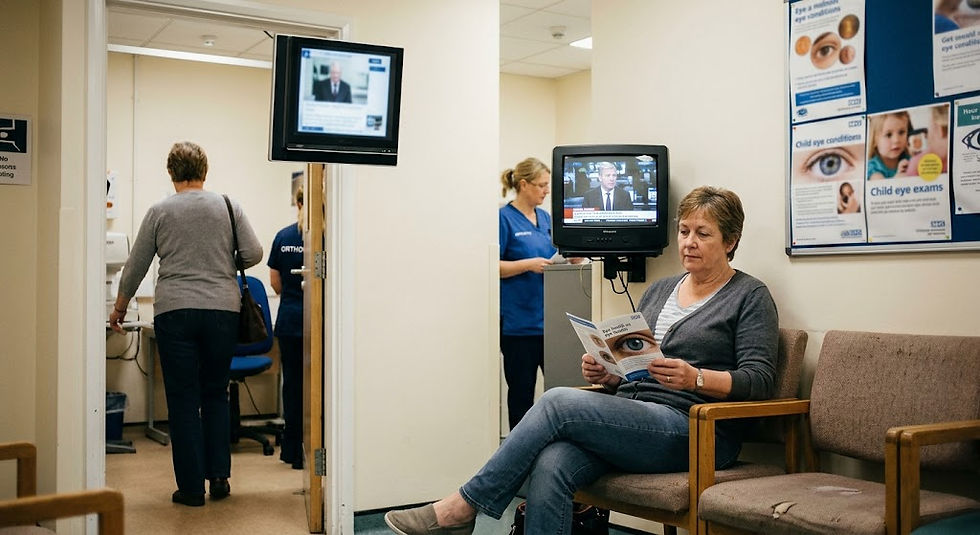
If you have finally found a name for the headaches, blur, and eye strain you have been living with, the next question is usually about cost and access. Binocular vision dysfunction is treatable, but working out whether the NHS covers that treatment is not always straightforward, and the answer depends heavily on how you got your diagnosis in the first place.
Eyes Quint gets asked this question almost as often as "what is BVD" itself. Patients want to know whether they need to go private, whether a GP referral changes anything, and how long an NHS pathway typically takes compared with booking directly with a specialist. The short answer is that NHS support exists, but it is patchy and depends on where you live and how your case is picked up.
How NHS Eye Care Is Structured Around BVD?
The NHS funds routine eye tests for certain groups, such as children, people over sixty, and those with specific medical conditions, but a standard sight test focuses on prescription and general eye health rather than detailed coordination testing. Binocular vision dysfunction sits slightly outside this default pathway, which is why so many people are told their eyes are "fine" despite ongoing symptoms.
Orthoptic services do exist within the NHS, usually attached to hospital eye departments, and they are the correct setting for BVD assessment and treatment. The catch is access. You generally need a referral, either from a GP or from an optician who has flagged something worth investigating further, before you can be seen by an NHS orthoptist.
Waiting times for these referrals vary widely across the country. Some areas have a dedicated orthoptic clinic with a reasonably short wait, while others route patients through a general ophthalmology list where a coordination problem might not be the priority. This inconsistency is one of the main reasons people end up looking at private options for a faster or more thorough binocular vision dysfunction assessment.
Getting a GP or Optician Referral for BVD
The most reliable way to access NHS orthoptic services is through a referral, and being specific about your symptoms makes a real difference to how that referral is written. A GP appointment framed around "tired eyes" is likely to result in advice about screen breaks. The same appointment framed around persistent headaches linked to reading, intermittent double vision, or a history of normal sight tests despite ongoing discomfort is more likely to prompt an eye clinic referral.
Opticians can also refer directly to hospital eye services if they notice something during a routine check, such as unusual eye movement or a struggle with certain tests. It is worth mentioning your specific symptoms during a standard sight test rather than assuming the optician will ask, since the appointment structure does not always leave room for a detailed conversation.
Children are generally seen more quickly through NHS pathways than adults, since school vision screening and paediatric referral routes tend to prioritise younger patients. This is covered in more depth in the guide to whether a child is a struggling reader or has an underlying vision problem, which explains how schools and GPs often work together on early referrals.
What NHS BVD Treatment Typically Covers?
Once you reach an NHS orthoptic clinic, the assessment itself is thorough and follows much the same process as a private evaluation, checking eye alignment, convergence, and how well the two eyes fuse images together. Treatment options through the NHS commonly include prism lenses, eye exercises, and in some cases patching, depending on the specific type of coordination problem identified.
More intensive vision therapy programmes, which involve regular sessions over several weeks or months, are less consistently available on the NHS. Some hospital trusts run structured programmes, while others have limited capacity and can only offer basic exercises to complete at home with periodic review. This is where the gap between NHS and private provision becomes most noticeable, and it is worth asking directly what your local trust can offer before assuming a full course of therapy will be included.
Surgical correction, used for more severe or structural cases involving conditions like strabismus, is generally available on the NHS when clinically indicated, though waiting times for non-urgent surgery can extend well beyond a year in some regions.
Common Misconceptions About NHS Eligibility
A lot of confusion around NHS BVD treatment comes down to a handful of persistent myths. One common assumption is that a normal sight test result means there is nothing further to investigate, which is exactly backwards. A normal prescription simply confirms the eyes can focus clearly; it says nothing about whether they coordinate well together, which is the actual question a BVD assessment answers.
Another misconception is that NHS treatment is only available for children. While paediatric referral pathways are often faster, adults are equally entitled to NHS orthoptic assessment and treatment. The referral route is the same, through a GP or optician, and the underlying tests do not differ meaningfully by age.
Some people also assume that once they have had one eye test that came back normal, going back to ask about BVD specifically will be seen as unnecessary. In practice, opticians and GPs would rather hear about persistent symptoms directly than have a patient continue to struggle silently. Framing the conversation around specific, ongoing symptoms rather than a general request for "another eye test" tends to produce a much more useful response.
Combining NHS and Private Care Sensibly
Many patients end up using a mix of NHS and private services rather than choosing one exclusively, and this is a perfectly reasonable approach. A common pattern involves a private assessment for a fast, detailed diagnosis, followed by ongoing management shared between private review appointments and any NHS resources available locally, such as school-based support for a child's reading difficulties.
This kind of blended approach can also help manage cost over time. An initial private assessment clarifies exactly what is going on and what treatment is needed, which then makes any NHS referral conversation far more focused and specific, potentially speeding up how quickly you are seen once in the NHS system.
There is no requirement to declare which route you are using to either service, and moving between them as your circumstances change, whether due to cost, waiting times, or simply wanting a second opinion, is entirely normal practice in eye care.
Private Assessment as an Alternative Route
Many people choose a private assessment not because the NHS cannot help, but because the waiting time or limited programme options do not match how quickly they want answers. A private orthoptic clinic can usually offer an appointment within days or weeks rather than months, along with a more flexible treatment plan tailored to the specific findings.
Cost varies by clinic and by the complexity of the treatment plan, but an initial assessment is a fixed, known expense, which some people prefer to an open-ended wait. Private treatment can also run alongside NHS care in some cases, particularly if you are waiting for a hospital appointment and want to start managing symptoms sooner through vision therapy or an interim pair of prism lenses.
It is worth noting that going private does not close off NHS options later. If your symptoms change or a private assessment identifies something requiring surgical input, a referral back into NHS care remains available in the usual way.
Regional Variation in NHS Orthoptic Provision
One of the more frustrating aspects of NHS eye care is how differently it operates from one area to the next. Some hospital trusts have well-staffed orthoptic departments with short waiting times and structured therapy programmes. Others have a single orthoptist covering a wide catchment area, which naturally pushes waiting times up and limits how much ongoing therapy can realistically be offered.
This is not something patients can change directly, but it is worth knowing before you start the referral process. If you live somewhere with limited local provision, your GP may be able to refer you to a neighbouring trust with shorter waits, though this depends on local commissioning arrangements and is not guaranteed. Asking the question directly at your GP appointment costs nothing and occasionally opens up options that are not offered by default.
It is also worth checking whether your workplace offers any health cover that includes eye care, since some policies cover a private orthoptic assessment even when they do not cover glasses or routine sight tests. This can be a useful way to access a faster diagnosis without paying the full private cost yourself.
Questions Worth Asking Before You Commit to a Pathway
Before deciding between an NHS referral, a private assessment, or a combination of both, it helps to ask a few direct questions rather than assuming one route will automatically suit your situation. Start by asking your GP or optician roughly how long the local waiting list currently runs for orthoptic assessment, since this figure can vary from a few weeks to well over a year depending on your area.
If you are considering private treatment, ask the clinic what the initial assessment includes, whether follow-up appointments are included in the price or charged separately, and roughly how many sessions a typical treatment plan involves for a case similar to yours. Clear answers to these questions upfront prevent surprises later and make it easier to compare the real cost and time commitment against the NHS route.
It is also reasonable to ask any clinic, NHS or private, what happens if the first treatment approach does not fully resolve your symptoms. A good answer will involve a clear next step, whether that means adjusting the exercises, trying a different lens prescription, or considering a referral for further investigation, rather than a vague suggestion to simply continue as before.
What to Expect at Your First NHS Orthoptic Appointment?
Once a referral comes through, the first NHS appointment usually mirrors what happens in a private assessment, though it may be split across more than one visit depending on how busy the department is. Expect questions about your symptom history, followed by tests measuring how your eyes move, converge, and align at different distances.
Bring a clear account of your symptoms to this appointment, including when they started, what makes them worse, and whether anything specific triggers them, such as prolonged reading or screen use. Orthoptists work more efficiently when they have this detail upfront rather than needing to draw it out through general questioning during a time-limited slot.
If a treatment plan is recommended, ask directly what is involved, how long it typically takes to show improvement, and what the review schedule looks like. NHS capacity means follow-up appointments are sometimes spaced further apart than in a private setting, so understanding what to expect at home between visits helps you stay on track with any prescribed exercises.
Making the Right Choice for Your Situation
There is no single correct answer between NHS and private BVD treatment, since the right route depends on your symptoms, how quickly you need relief, and what is realistically available in your area. Starting with a GP referral costs nothing and is worth pursuing regardless, even if you also choose to book a private assessment in parallel to avoid a long wait.
If your symptoms are affecting work, school, or daily comfort and you would rather not wait months for a first appointment, Eyes Quint offers direct-access orthoptic assessments without needing to go through a GP first. Book an appointment to get a clear diagnosis and a treatment plan you can start straight away, whichever route you decide suits you best.
Frequently Asked Questions
Does the NHS treat binocular vision dysfunction?
Yes, NHS orthoptic clinics assess and treat binocular vision dysfunction, but access usually requires a referral from a GP or optician, and waiting times vary significantly by region.
How do I get referred to an NHS orthoptist?
Speak to your GP or optician and describe your symptoms clearly, including when they occur and what triggers them. A referral to hospital eye services or a dedicated orthoptic clinic is the standard route.
Is vision therapy available on the NHS?
Some NHS trusts offer structured vision therapy programmes, while others provide more limited exercises with periodic review. Availability depends heavily on local resourcing, so it is worth asking directly what your trust can offer.
How long is the NHS waiting list for BVD treatment?
Waiting times vary widely, from a few weeks in well-resourced areas to over a year in others, particularly for non-urgent surgical referrals.
Is it worth paying for a private BVD assessment?
A private assessment can offer a much faster appointment and a more flexible treatment plan, which suits people who want answers quickly. It does not prevent you from continuing to use NHS services afterward.
Can children get BVD treatment faster than adults on the NHS?
Children are often prioritised through school vision screening and paediatric referral pathways, so appointments for children tend to move more quickly than equivalent adult referrals.


Comments